Play Therapy uses play and creativity to help children who display emotional or behavioural difficulties, those who have experienced trauma; as well as children who may need support expressing themselves.
Spending quality one-to-one time with a Play Therapist allows children to work through their challenges in a safe and confidential environment. The therapeutic tool-kit consists of Clay; Music, Dance and Movement; Drama, Role Play and Dressing Up; Puppets; Sand Tray and Small World Play; Arts and Crafts; Drawing and Painting; Creative Visualisation and Story Telling – helping each child to fulfil their true potential.
Please refer to ‘What is Play Therapy?’ on the PTUK website, for further information.
Play is an important aspect of children’s development and growth. Through play, they are able to mimic, rehearse, discover, and begin to understand what they see, hear, and feel; whilst recognising and understanding their own thoughts and feelings within the confounds of a structured, safe space. Through the support of a trained therapist, children have the freedom and security to work through, and express their feelings. They can learn to gain confidence, build on their self-esteem, and rise to their potential.
Please refer to ‘How Does Play Therapy Work?’ on the PTUK website, for further information.
A play therapist has to complete additional training to gain a Postgraduate diploma in addition to the training completed to become a therapeutic play practitioner (Postgraduate Certificate.) Play therapists have to complete a supplementary 100 clinical hours in addition to the standard 100 clinical hours completed for the Postgraduate certificate.
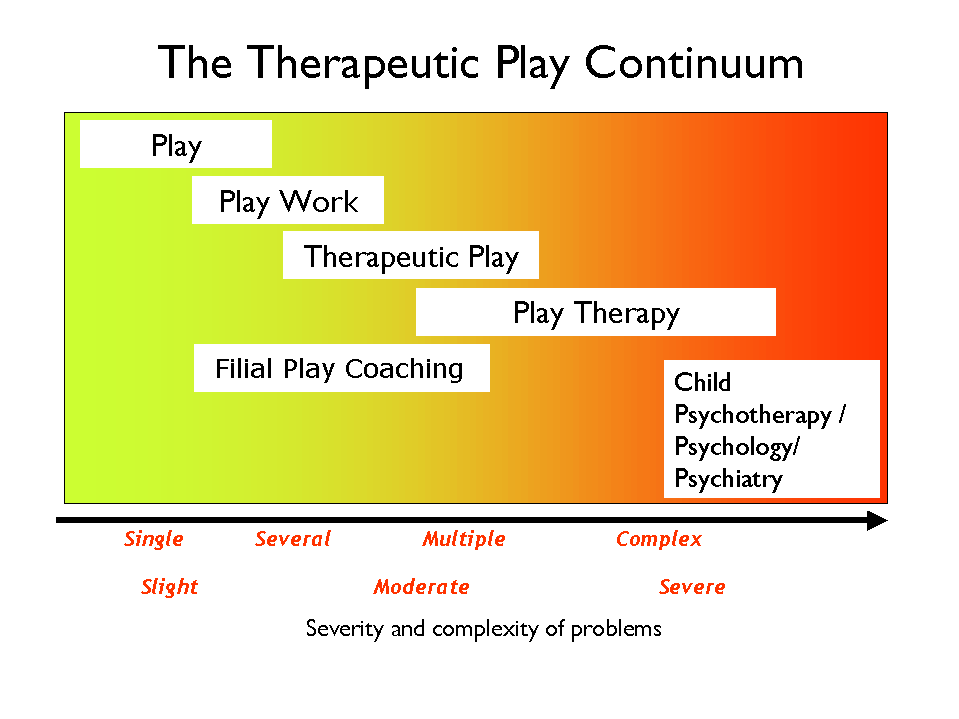
Therapeutic play practitioners are trained to a level that allows them to work with those who have low to moderate level behavioural and emotional challenges.
Play therapists are trained further to accommodate those with moderate to lightly severe challenges.
Please refer to ‘Training requirements‘ on the Register of Play Creative Arts Therapists website for further information.
Strengths and difficulties questionnaires are completed by the teacher/setting staff and parent/carer as well as holding parental and staff meetings to discuss the child’s challenges, concerns and background history. From this we are able to establish the needs of the child and the appropriate type of therapy can be recommended.
Who may benefit can include but is not limited to children and young people who:
- may lack confidence in their abilities or themselves;
- have been abused, witnessed domestic abuse, violence, conflict or other traumatic events;
- have been neglected, struggle to maintain friendships or have experienced/used bullying behaviours;
- have attachement difficulties, emotional or behavioural difficulties;
- have or live with someone with a long term illness or disabilities, or who may be in hospital;
- have experienced a bereavement, family separation or divorce;
- may be in care – have been fostered or adopted;
- or appear unable to play, may appear withdrawn, disconnected, anxious and/or worried.
Please send an email with a brief overview of what you are looking for and we will get back to you within 24 hours.
info@GrowingTogetherChildrensTherapy.co.uk
 Growing Together Therapeutic Services